 Slopcamera
How-to guides
Build and revise a parametric design
Compile an editable architectural or furniture study, change coupled dimensions, and compare five retained-source renders.
Create an architectural or furniture study, change its dimensions, and render the generated model while retaining the rules that built it. A design connects named parameters to geometry stages; compilation writes an ordinary spatial scene, generated GLB geometry, asset facts, and a receipt.
Install Slopcamera v3.3.2 or use a source build for slopcamera scene design. Obtain the retained study inputs from the linked repository sources; they are separate from the release archive. Inspect the available commands with slopcamera help scene and the local rendering requirements with slopcamera doctor --json. Design inspection and compilation need no browser, Rhino, cloud account, or paid generation. Rendering the finished scene needs the local browser runtime described in Render and edit spatial scenes.
Compile and render a study
The retained study sources pair each design.json with its base.scene.json. Work from the repository root and keep both files: the design owns the dimensions and geometry rules; the base scene owns the staging, lights, and cameras.
Inspect the pavilion's controls, dependencies, constraints, and estimated geometry:
slopcamera scene design inspect examples/showcase/parametric/crescent-pavilion/design.json --json
Resolve any failed constraint before compiling. Choose a fresh output directory, then compile the model and render its supplied hero request:
slopcamera scene design compile examples/showcase/parametric/crescent-pavilion/design.json \
  --scene examples/showcase/parametric/crescent-pavilion/base.scene.json \
  --output-dir artifacts/slopcamera/generated/pavilion-v1 --json

slopcamera scene render artifacts/slopcamera/generated/pavilion-v1/scene.json \
  --request artifacts/slopcamera/generated/pavilion-v1/render.json --json
Open the returned PNG and inspect the silhouette, repeated members, clear openings, and contact shadows. Retain the whole compiled bundle, including design.json, scene.json, geometry and facts payloads, and receipt.json. If compilation stops before writing its completion receipt, keep that directory for inspection and choose a fresh path for the next attempt.
To start a separate design from the installed catalog, run slopcamera scene design catalog --json, then slopcamera scene design init pavilion-source --template crescent-pavilion --json. The retained inputs below reproduce these particular studies; installed starters can change with the source version.
Crescent pavilion
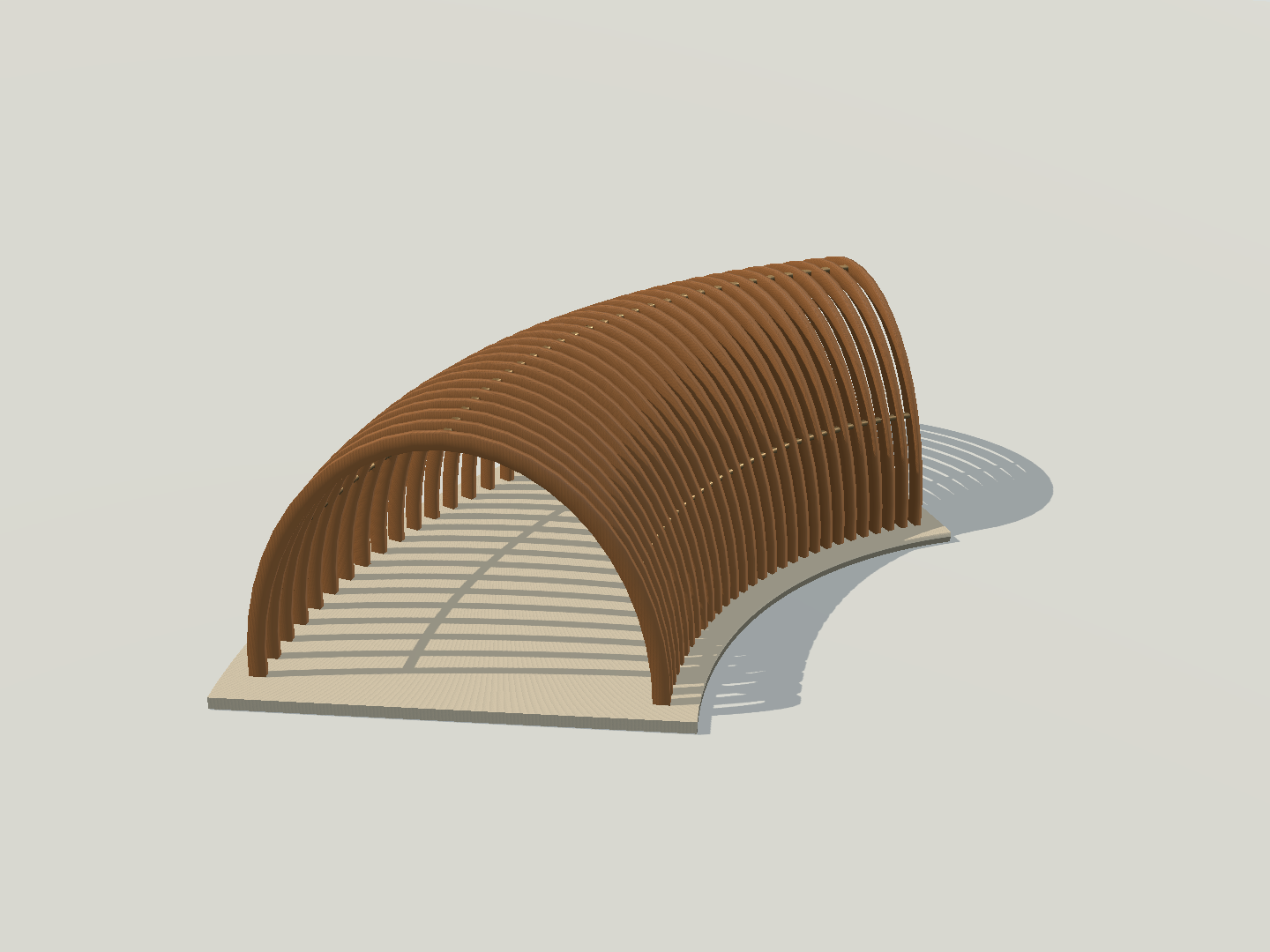
Curved timber ribs sit above a continuous stone walk, with separate bronze longitudinal ties. The retained source uses a 6.2 m span, 4.1 m crown height, 11.5 m walk length, and 1.1 rad plan curvature. Inspect the daylight between adjacent ribs and the open inner edge before increasing the bend or member width.
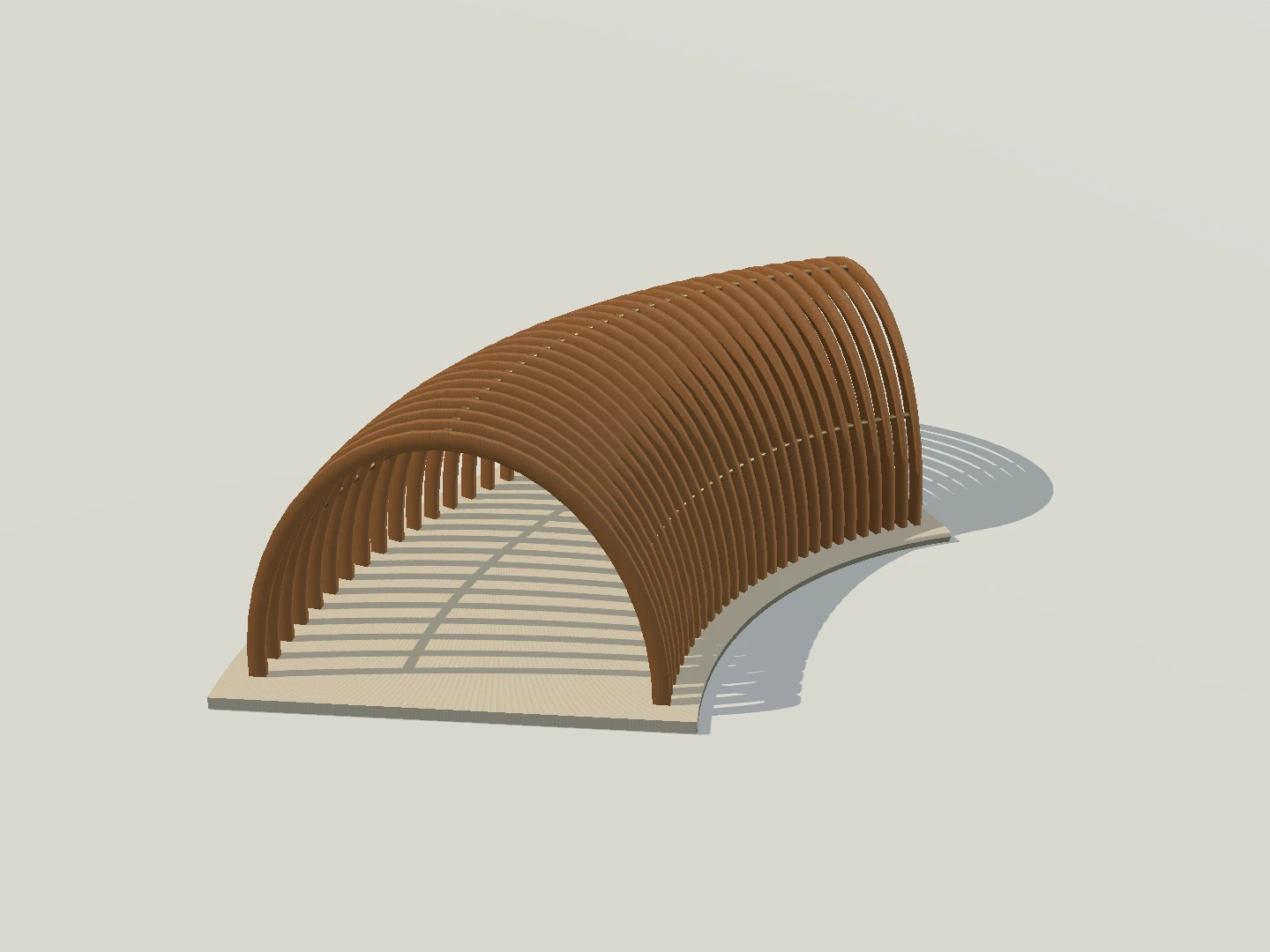
A timber pavilion built from editable dimensions, repeated ribs, and a curved plan. Change the parameters and render again.
Download this example
Requires: Slopcamera v3.3.1 or a source build, the linked repository study inputs, and a local Chrome or Chromium runtime. Local rendering; no cloud account.
Crescent pavilion wide
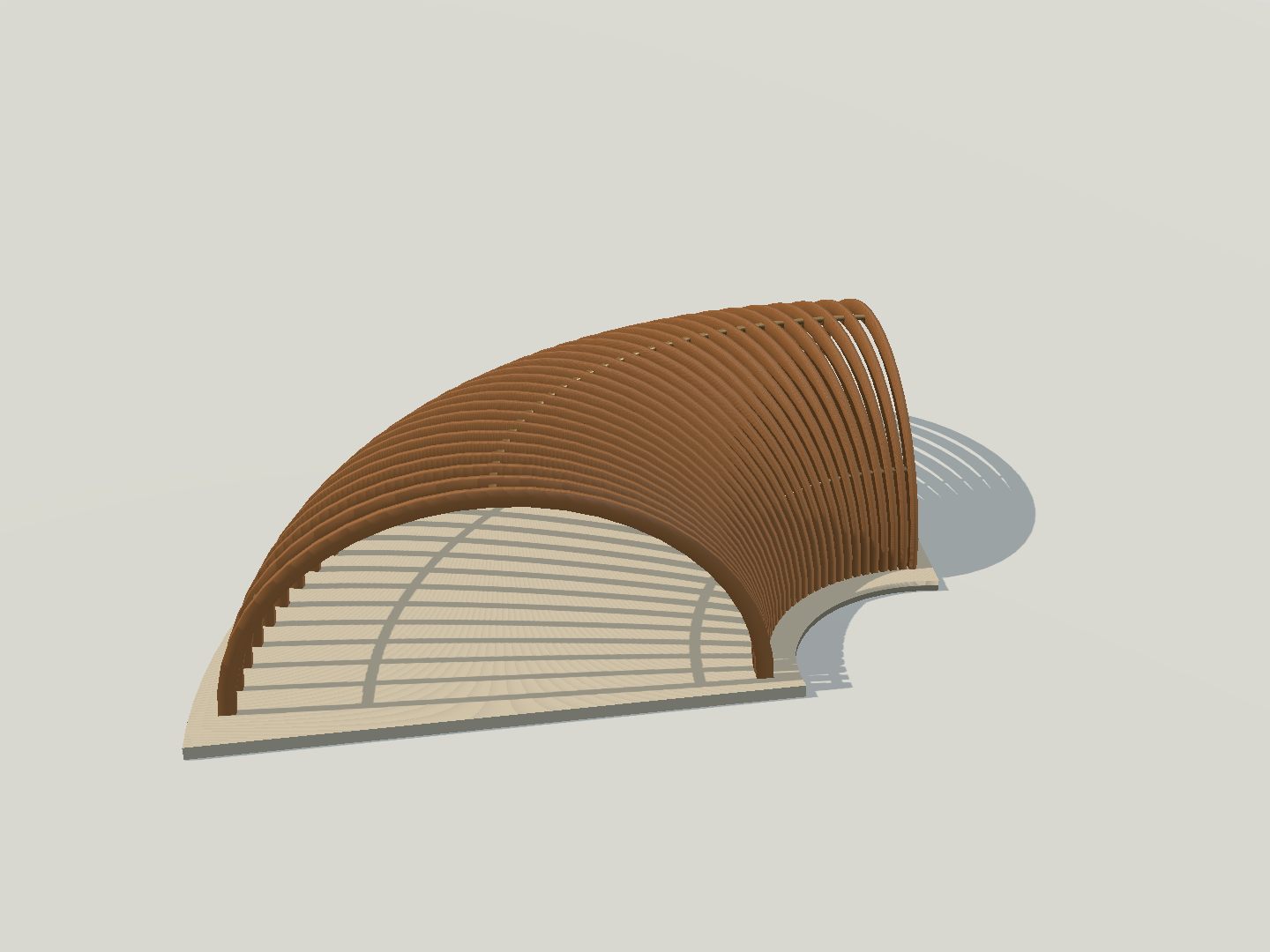
The second pavilion keeps the same design identity, geometry stages, and base scene. It changes span to 8 m, crown height to 3.3 m, and plan curvature to 1.6 rad. Compare the lower, wider opening and tighter curve with the first study through the same camera.
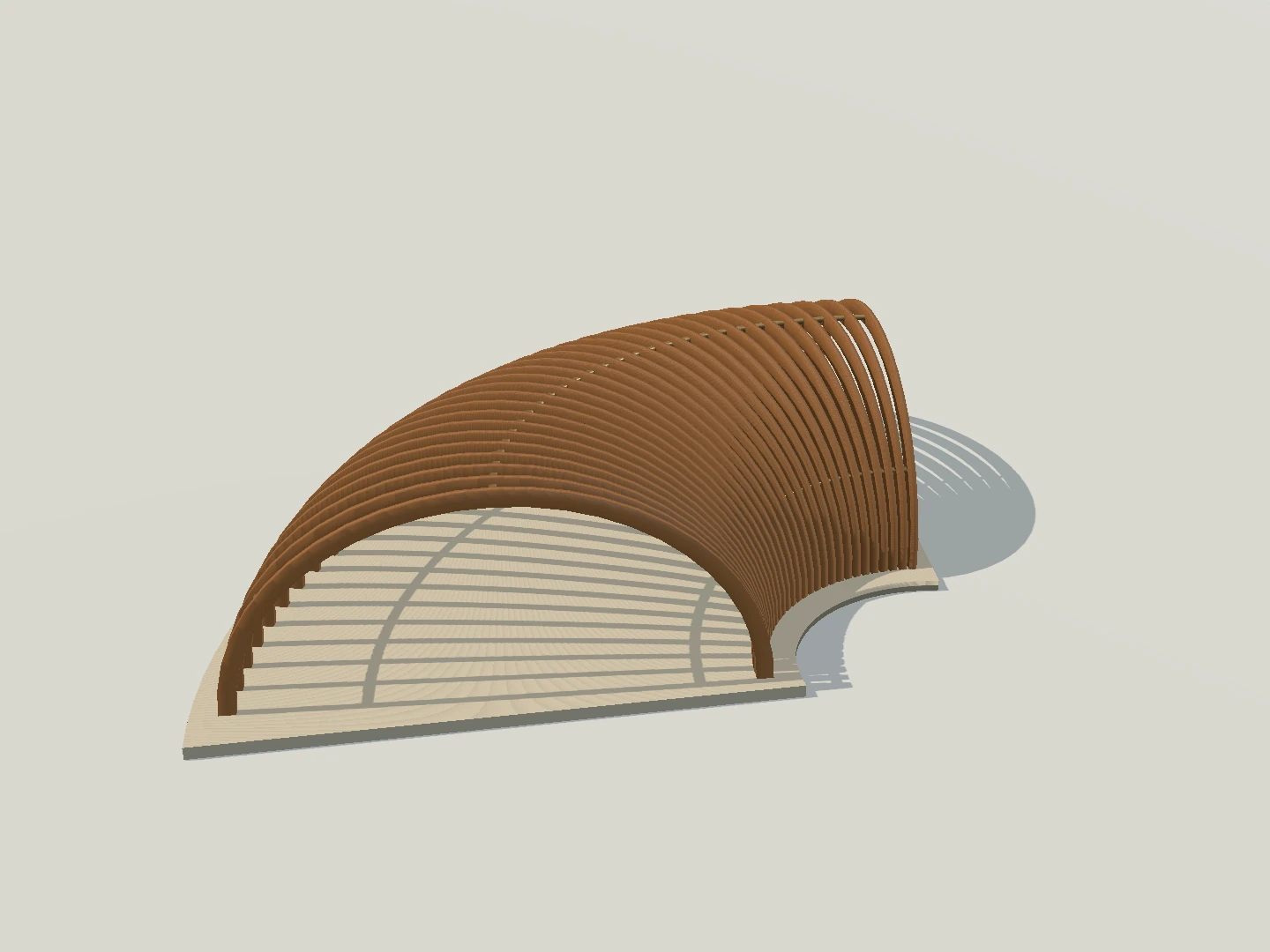
The same pavilion and camera, with span changed from 6.2 to 8 metres, crown height from 4.1 to 3.3 metres, and plan curvature from 1.1 to 1.6 radians.
Download this example
Requires: Slopcamera v3.3.1 or a source build, the linked repository study inputs, and a local Chrome or Chromium runtime. Local rendering; no cloud account.
Save these values as pavilion-values.json:
{ "span": 8, "rise": 3.3, "bend": 1.6 }
Create a new design revision:
slopcamera scene design set examples/showcase/parametric/crescent-pavilion/design.json \
  --parameters pavilion-values.json \
  --output artifacts/slopcamera/generated/pavilion-wide.design.json --json
Compile that revision into a new directory using the original base.scene.json, then render its render.json. The dependent plinth, ribs, and ties regenerate together. Keep the earlier source and compiled bundle for comparison. If you need to preserve overrides on generated parts, compile against the previous scene.json and retain the design and stage identities; the design reference describes those merge rules.
Spiral stair
The stair combines stone treads, slender bronze balusters, continuous handrails, and a central support. Its controls include 6 m height, 2.25 m outer radius, 0.55 m inner radius, and 1.25 turns. Check the tread rhythm and the relation between the rails and landings when changing height or turns.
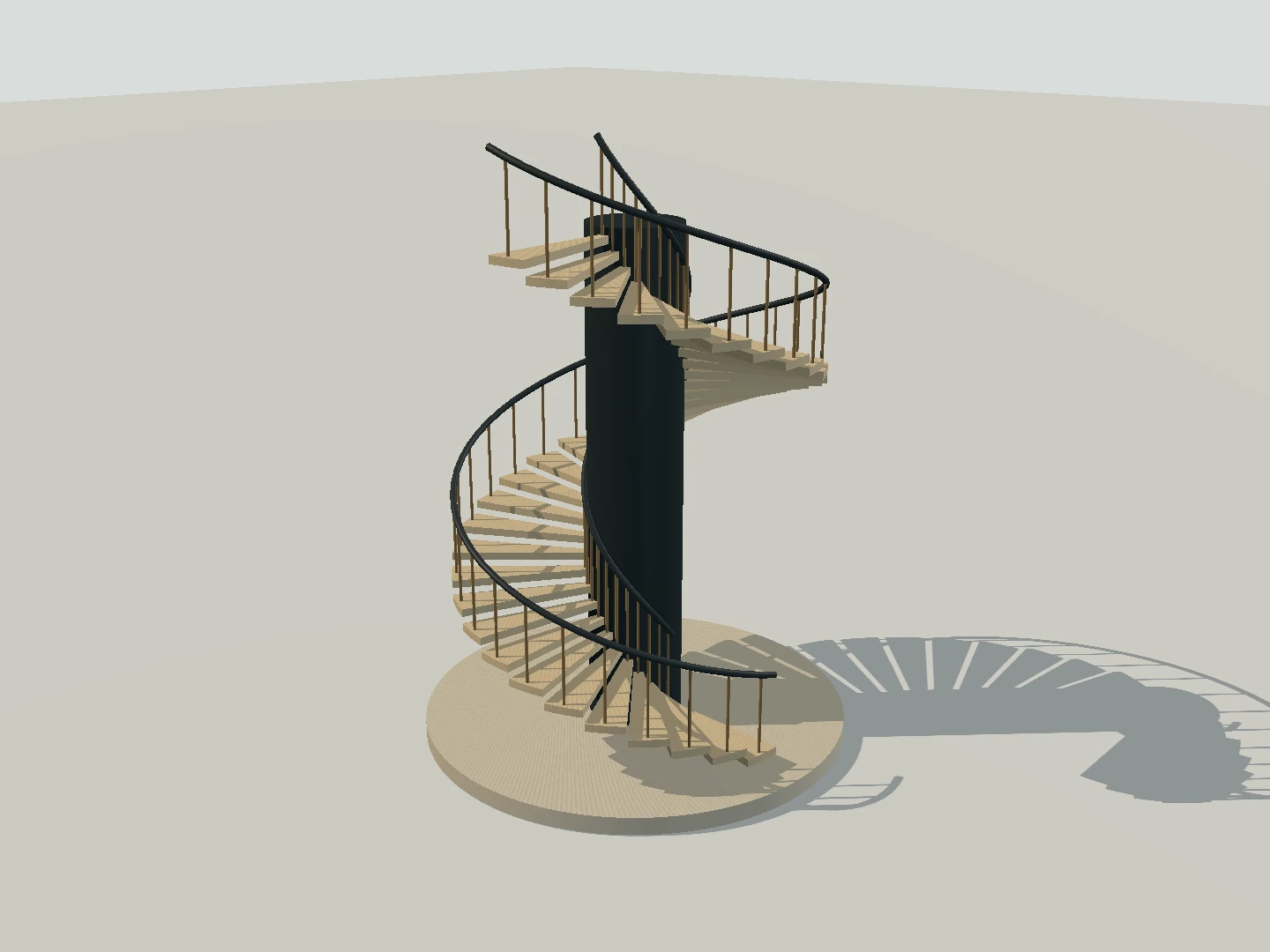
Stone treads and bronze rails follow a 1.25-turn spiral around a central support. Retained controls set the height and inner and outer radii.
Download this example
Requires: Slopcamera v3.3.1 or a source build, the linked repository study inputs, and a local Chrome or Chromium runtime. Local rendering; no cloud account.
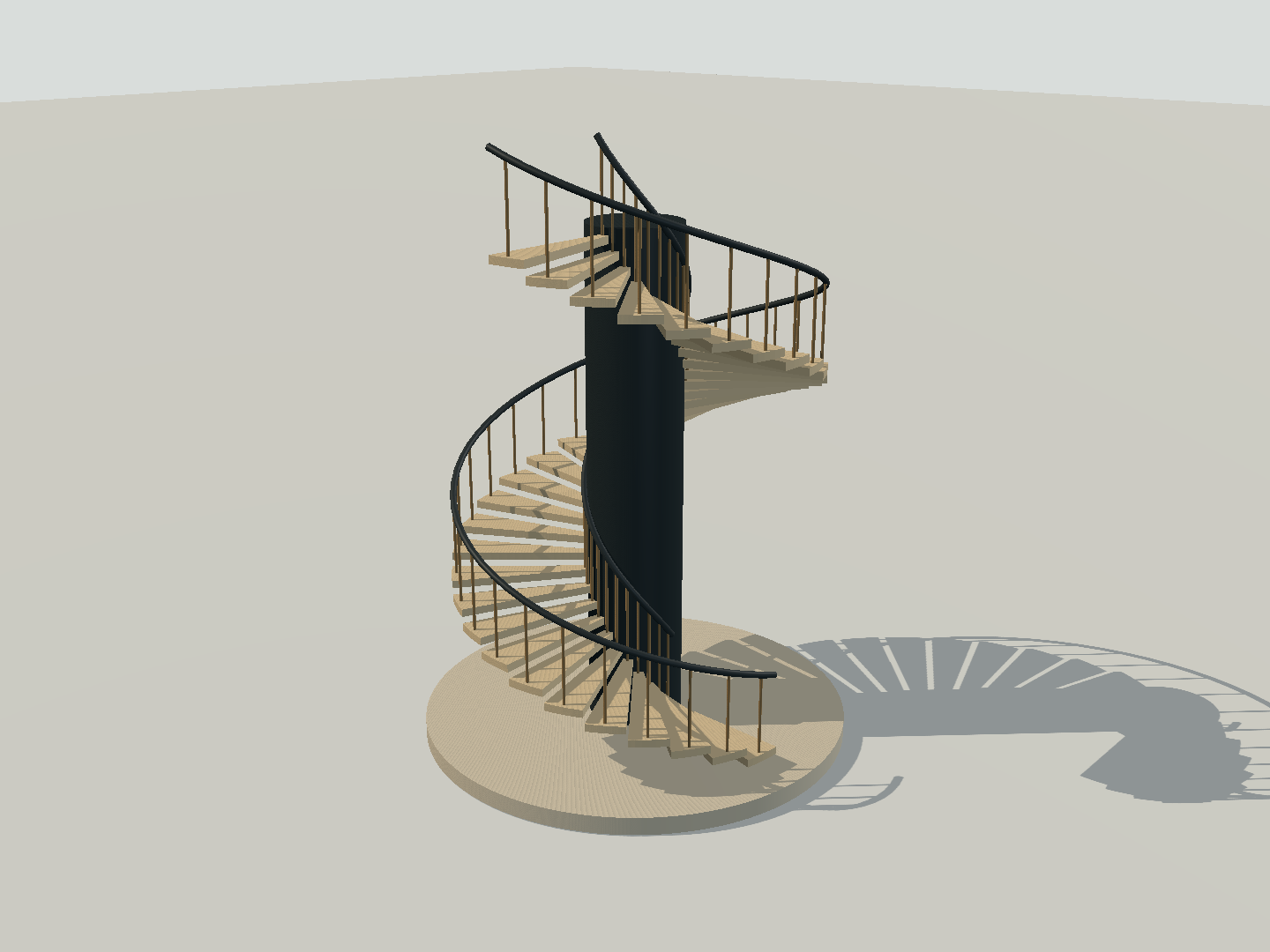
Use the files in examples/showcase/parametric/spiral-stair/ with the same inspect, compile, and render sequence. Choose a fresh output directory such as artifacts/slopcamera/generated/stair-v1.
Ribbed tower
Forty bronze ribs surround 13 recessed floor plates and an opaque central core. The retained source is 16 m high, with a 3.25 m radius and a 1.35 rad twist. Height, radius, taper, belly, and rib radius alter the generated envelope. Check the full silhouette and the gaps between ribs through the hero and detail cameras.
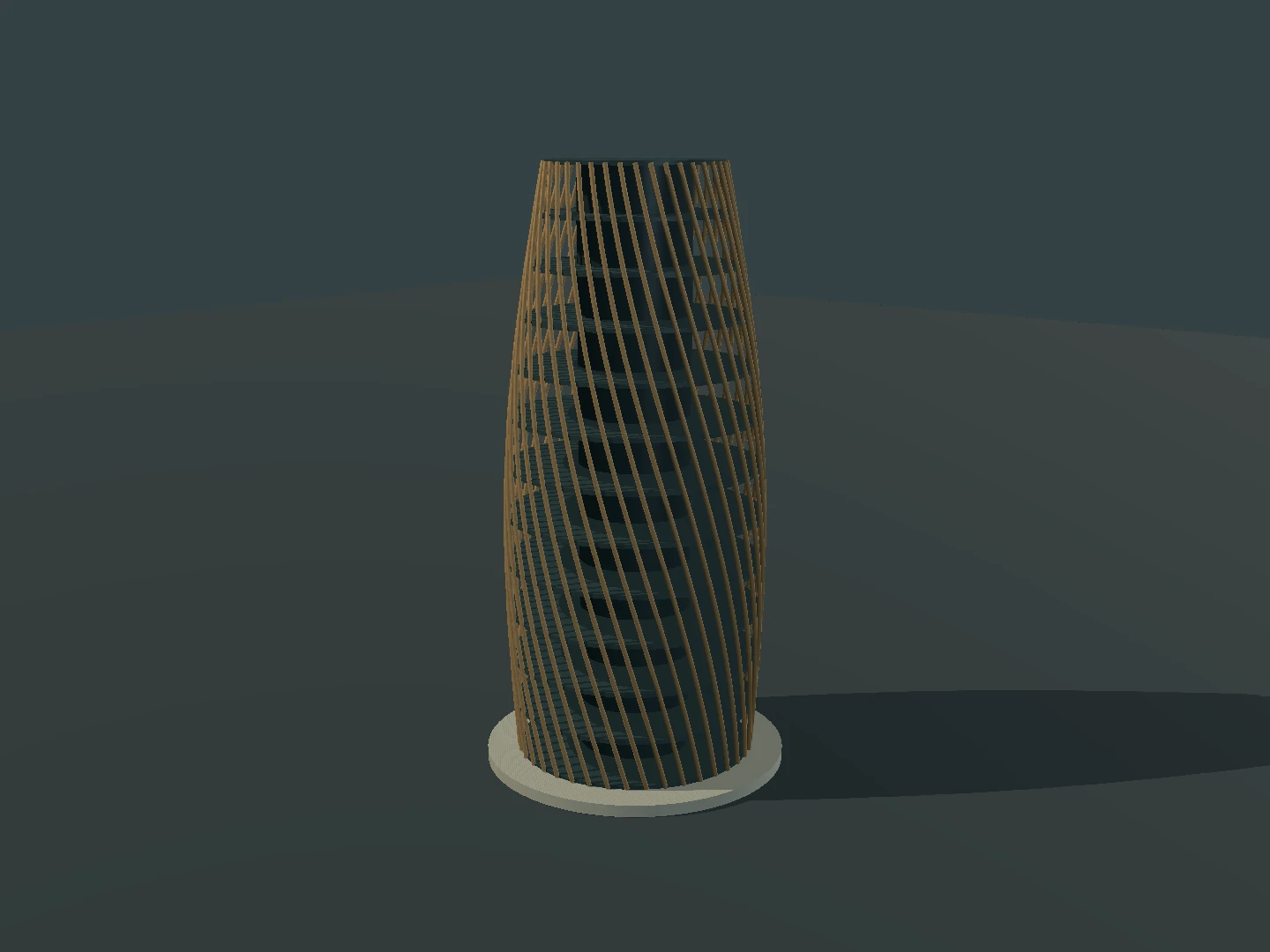
Forty bronze ribs wrap around 13 recessed floor plates. Height, taper, radius and twist remain editable in the retained design.
Download this example
Requires: Slopcamera v3.3.1 or a source build, the linked repository study inputs, and a local Chrome or Chromium runtime. Local rendering; no cloud account.
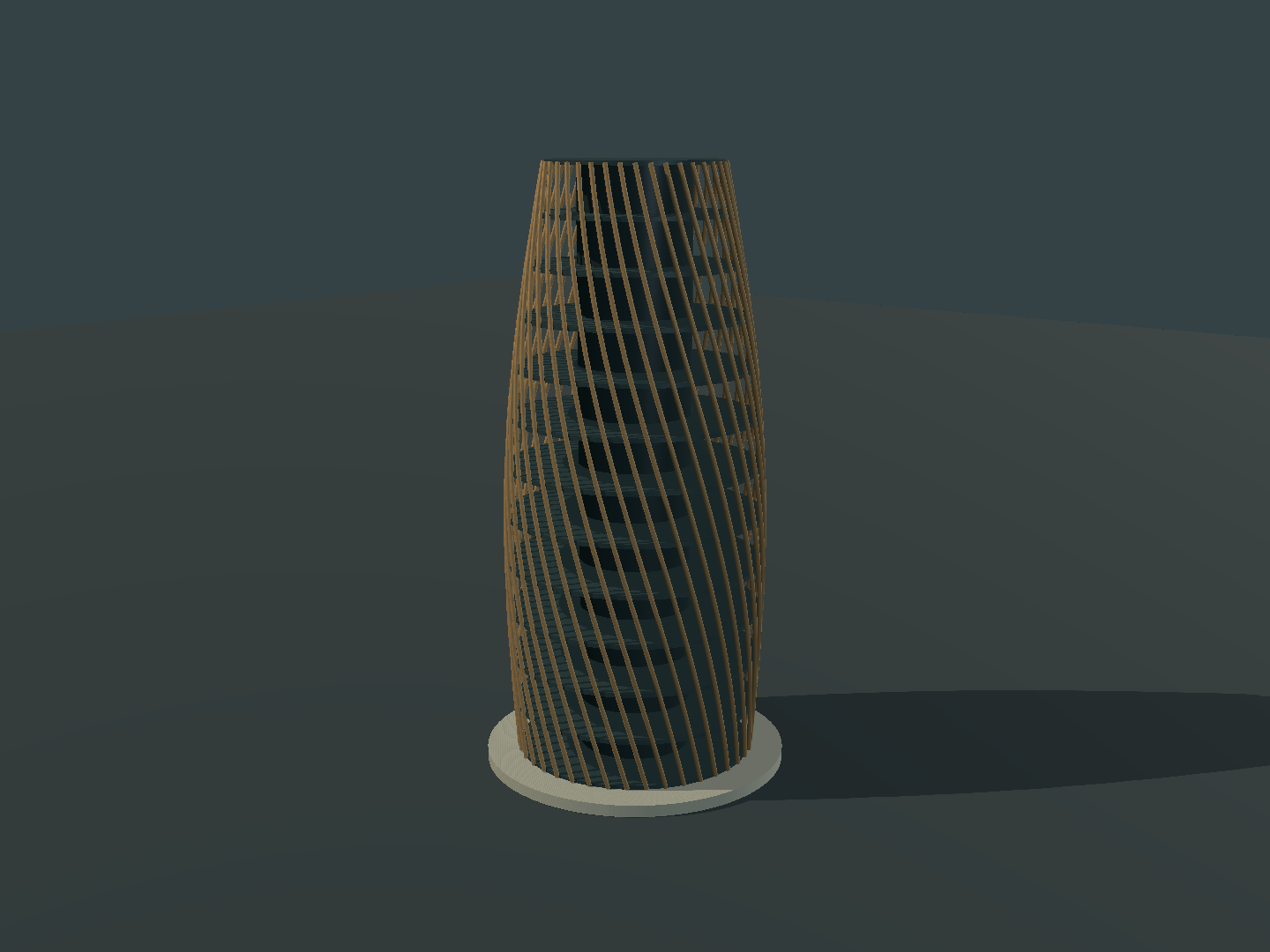
The source pair is in examples/showcase/parametric/ribbed-tower/. Keep the camera and lighting fixed when comparing a dimensional edit so the changed silhouette remains easy to judge.
Modular bookshelf
Walnut shelves and uprights form five bays and four rows, with alternating terracotta backs, books, and a separate ceramic piece. The retained dimensions are 4.8 m wide, 2.7 m high, and 0.42 m deep, with 0.042 m board thickness. Inspect the bay spacing and board proportions when changing the width or bay count.
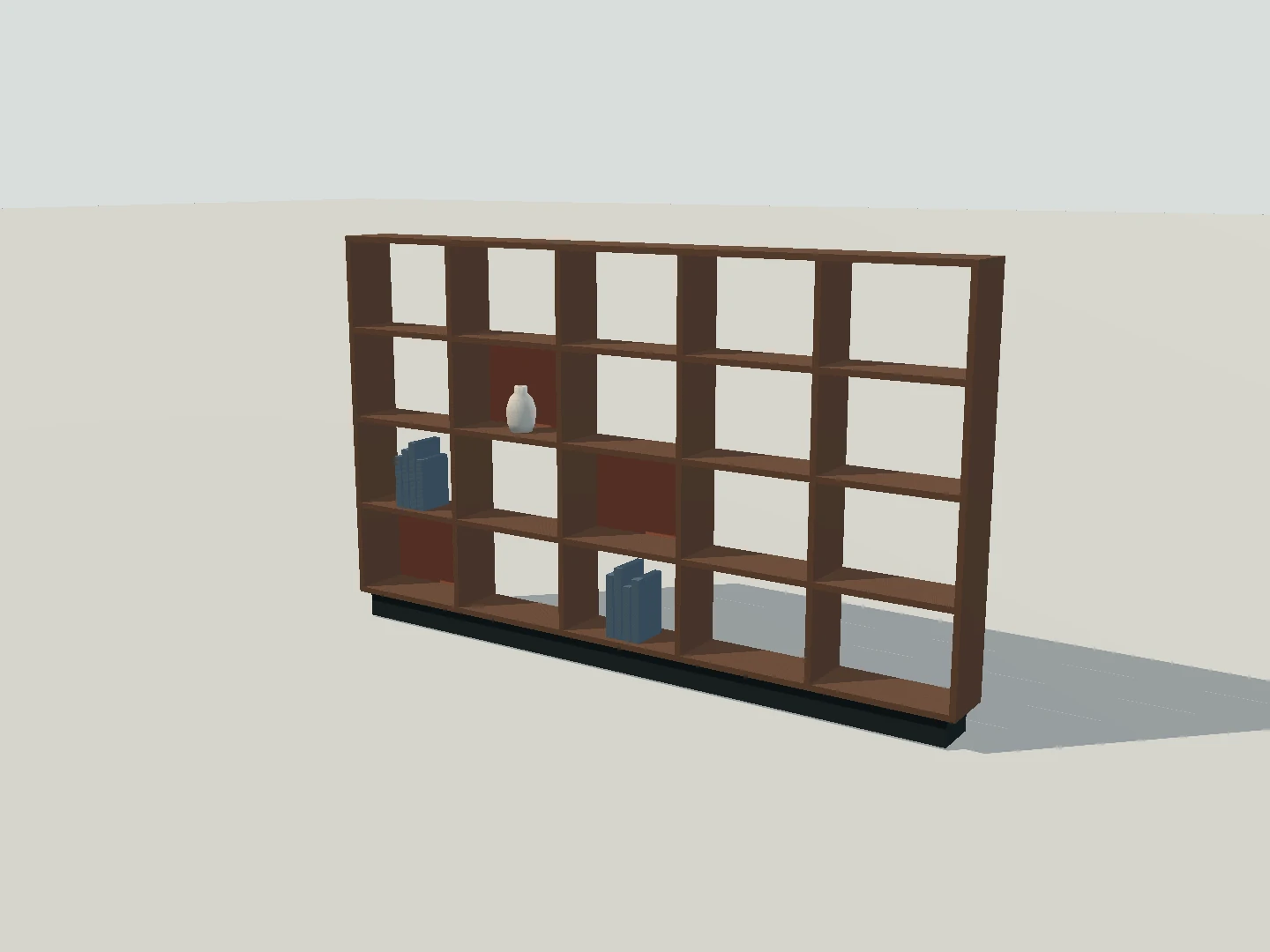
Five bays and four rows of walnut shelves, with terracotta backs and separate books and ceramic geometry. Change the dimensions while retaining the construction rules.
Download this example
Requires: Slopcamera v3.3.1 or a source build, the linked repository study inputs, and a local Chrome or Chromium runtime. Local rendering; no cloud account.
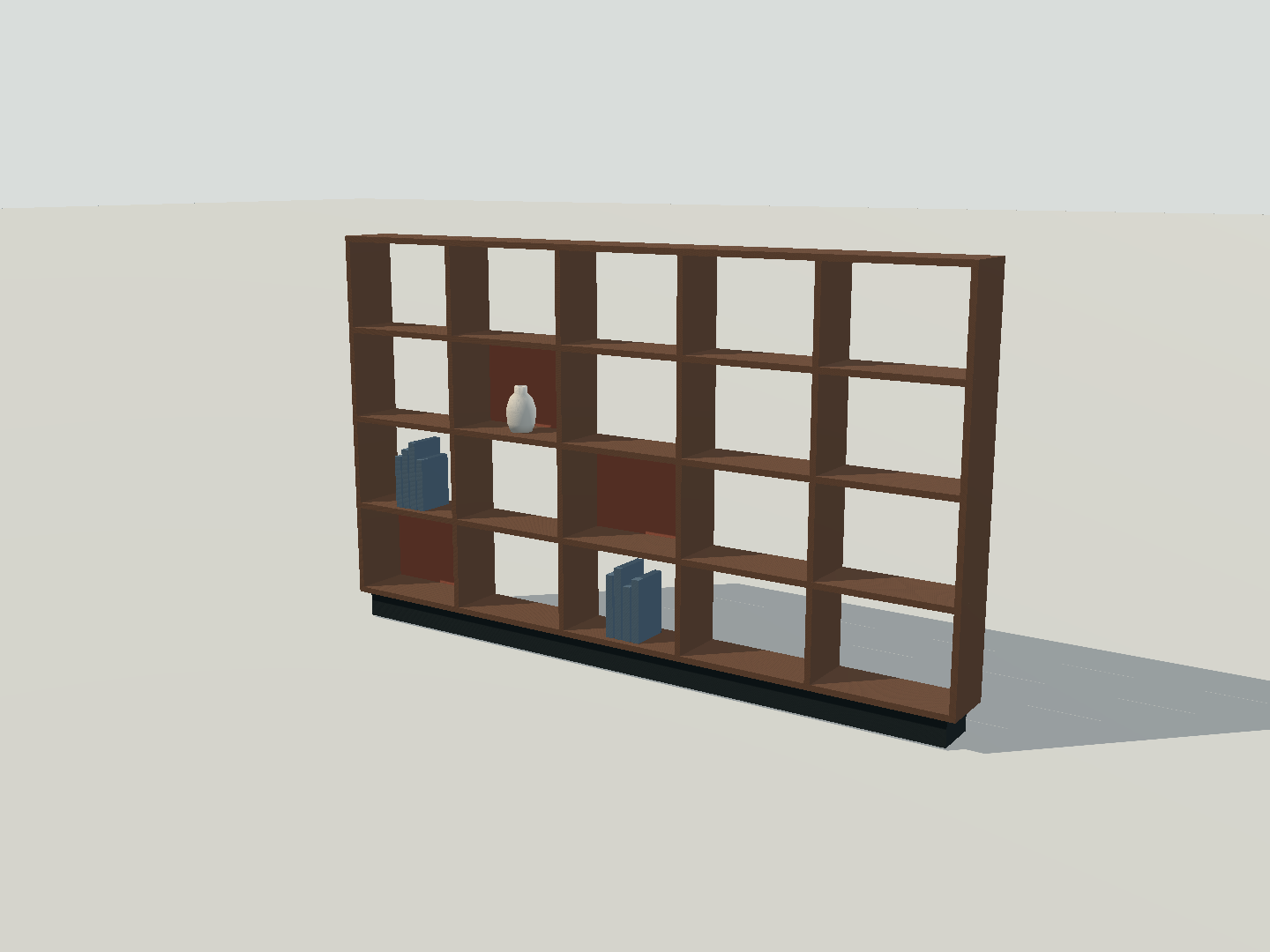
The source pair is in examples/showcase/parametric/modular-bookshelf/. Its named geometry stages keep the shelves, dividers, backs, plinth, books, and ceramic distinct.
Compare candidates before selecting
For a bounded comparison, save pavilion-variants.json:
{
  "kind": "slopcamera.spatial-design-variants",
  "schemaVersion": 1,
  "variants": [
    { "id": "compact", "label": "Compact span", "parameters": { "span": 5 } },
    { "id": "generous", "label": "Generous span", "parameters": { "span": 7 } }
  ]
}
slopcamera scene design gallery examples/showcase/parametric/crescent-pavilion/design.json \
  --variants pavilion-variants.json \
  --scene examples/showcase/parametric/crescent-pavilion/base.scene.json \
  --output-dir artifacts/slopcamera/generated/pavilion-options --json
The gallery compiles separate source and geometry bundles for up to six candidates. Render each candidate's scene.json and render.json through the same camera before selecting a result. A compilation receipt binds inputs and outputs; it does not replace inspection of the rendered image.
The original study sources are MIT-licensed Slopcamera examples. These are visual design studies; their dimensional constraints do not certify structural strength, code compliance, or fabrication tolerances. Use native film tools when you need Blender shading or native CadQuery operations. The design compiler does not execute Grasshopper .gh definitions or import Rhino .3dm files directly.